How to Use Smart Litter Box App Data to Monitor Your Cat’s Health: A Complete Guide
Introduction
Smart litter boxes have transformed routine cat care into a data‑driven practice. By capturing weight, usage frequency, and waste characteristics, these devices enable owners to detect health changes before they become emergencies. This guide explains the essential concepts behind litter‑box telemetry, demonstrates how to interpret the metrics, and recommends proven products that simplify monitoring. Readers will leave with a clear strategy for turning app data into actionable health insights for their feline companions.
Background/Context
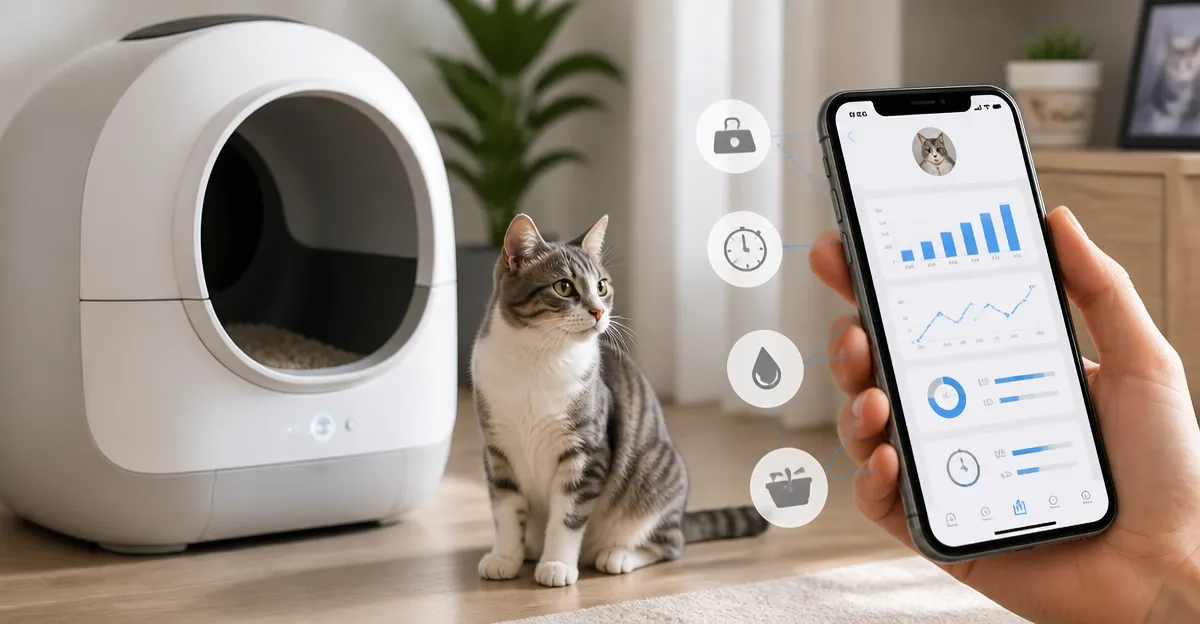
Traditional litter boxes provide no feedback beyond a visual cue that waste is present. Modern automated systems embed sensors, Wi‑Fi modules, and AI algorithms to generate continuous streams of information. Weight sensors identify subtle fluctuations that may signal obesity, kidney disease, or hyperthyroidism. Motion and infrared sensors confirm whether a cat has entered, exited, or abandoned the box, while integrated cameras can differentiate solid from liquid waste. The data are aggregated in companion apps, where owners can set alerts, view trends, and share reports with veterinarians.
Understanding Smart Litter Box Data
Smart litter boxes typically record three core data categories: weight, usage frequency, and waste composition. Weight measurements are taken each time a cat steps onto the scale, creating a daily weight log. Usage frequency tracks the number of visits per day, helping to identify polyuria (excessive urination) or anuria (lack of urination). Waste composition analysis, often powered by AI cameras, distinguishes between solid and liquid events, enabling early detection of urinary tract infections or gastrointestinal upset.
Most apps present these metrics in intuitive graphs, allowing owners to spot trends at a glance. For example, a gradual weight loss of more than 5% over two weeks may warrant a veterinary consultation. Similarly, an abrupt increase in nightly visits could indicate stress, pain, or a metabolic disorder.
Interpreting Weight and Usage Metrics
Weight data become valuable when paired with baseline measurements taken during a cat’s healthy state. The Mintakawa Smart Cat Litter Box includes an integrated scale that reports weight in real time, supporting cats from 3.5 lb to 15 lb. Users should record the initial weight after a period of adjustment, then monitor for deviations greater than 2–3 % per week, which often signal health concerns.
Usage frequency is equally informative. The Lohhuby Smart Cat Litter Box provides a one‑minute countdown after a cat exits before cleaning begins, ensuring accurate visit counts. A sudden drop in visits may indicate pain or litter aversion, while an increase in nocturnal trips may suggest diabetes or kidney disease.
Integrating Camera and AI Insights
Visual analysis adds a layer of precision that weight and frequency alone cannot achieve. The SiiPet LitterLens Cat Camera mounts on any litter box and uses AI to flag abnormal urination patterns, such as repeated attempts to strain. Users receive instant alerts, enabling rapid veterinary intervention, as illustrated by a review where early detection prevented a full urinary blockage.
For a fully integrated solution, the PETLIBRO Smart Litter Box combines a 24/7 odor‑control fan, AI waste analysis, and multi‑cat recognition. Its app can stream live video, track weight trends, and differentiate solid from liquid waste, providing a comprehensive health dashboard. Although advanced features require a subscription, the core monitoring capabilities remain valuable for most households.
Choosing the Right Smart Litter Box System
When selecting a system, consider size, sensor reliability, connectivity, and ongoing costs. Table 1 compares the five featured products across key dimensions.
| Product | Price (USD) | Rating | Weight Capacity | Noise Level | AI Features | App Connectivity |
|---|---|---|---|---|---|---|
| Lohhuby Smart Cat Litter Box | 119.99 | 4.4 | Medium cats & kittens | Whisper‑quiet | Basic health monitor | 2.4 GHz Wi‑Fi |
| PETLIBRO Smart Litter Box | 519.99 | 4.2 | Up to 22 lb | Quiet | AI waste analysis, multi‑cat recognition | Wi‑Fi, app, subscription |
| SiiPet LitterLens | 79.99 | 4.2 | Works with any box | N/A | Health alerts, multi‑cat recognition | 2.4 GHz Wi‑Fi |
| Purina Petivity Monitor | 99.97 | 4.1 | Under any box | N/A | Weight & usage AI, email reports | App (Android/iOS) |
| Mintakawa Smart Cat Litter Box | 107.99 | 4.0 | 3.5–15 lb | ≤35 dB | Basic weight tracking | 2.4 GHz Wi‑Fi & Bluetooth |
Owners with multiple cats may prefer the PETLIBRO model for its ten‑cat recognition capability, while those on a tighter budget might select the Lohhuby or Mintakawa units, which still deliver reliable weight monitoring and quiet operation. Users seeking a dedicated camera should consider the SiiPet LitterLens, especially if they already own a preferred litter box.
Best Practices & Tips
- Calibrate sensors during the first week by allowing the cat to use the box without cleaning cycles; this establishes a reliable baseline.
- Place a high‑quality litter mat outside the entry to capture stray granules and protect floor sensors.
- Use clumping litter compatible with the device’s sifting mechanism; both the Lohhuby and Mintakawa models recommend standard clumping litters.
- Set alert thresholds in the app for weight loss greater than 5 % or an increase in nightly visits exceeding 2 per day.
- Export weekly reports and share them with your veterinarian during routine check‑ups.
- Maintain a stable 2.4 GHz Wi‑Fi network; many devices, including SiiPet LitterLens, do not support 5 GHz connections.
- Regularly clean sensor housings and camera lenses to prevent false readings caused by dust buildup.
FAQ
- Do smart litter boxes work without internet? Core cleaning cycles operate locally on most models, but remote monitoring, alerts, and AI analysis require an active internet connection. PETLIBRO users should be aware that cloud outages can affect functionality.
- Can the devices differentiate between multiple cats? Yes. PETLIBRO and SiiPet LitterLens use AI to recognize individual cats, while Purina Petivity relies on weight patterns. Accuracy improves with distinct weight differences.
- How often should the waste bin be emptied? Waste capacity varies: Lohhuby holds 12 L, PETLIBRO’s sealed 11‑L bin lasts up to 14 days for a single cat, and Mintakawa’s bag system requires weekly changes for multiple cats.
- Are there subscription fees? PETLIBRO’s advanced health analytics and AI waste analysis require a subscription. SiiPet LitterLens offers basic features for free, with optional paid plans for advanced alerts. Purina Petivity is free but limited to basic tracking.
- What if my cat is larger than the advertised capacity? Larger breeds may experience restricted entry in open‑top designs. Mintakawa explicitly notes suitability up to 15 lb; PETLIBRO accommodates cats up to 22 lb.
- Is the data secure? All featured apps employ standard encryption for data transmission. However, users should review each manufacturer’s privacy policy, especially for devices that store data in the cloud.
- Can I use the camera with any litter box? The SiiPet LitterLens is designed to attach to most standard and automatic boxes, making it a versatile add‑on for owners who already have a preferred litter system.
Conclusion
Smart litter box technology empowers cat owners to transition from reactive scooping to proactive health monitoring. By understanding weight trends, usage patterns, and AI‑driven waste analysis, one can identify early signs of disease, reduce odor, and improve overall feline wellbeing. Selecting a system that aligns with household size, budget, and connectivity preferences ensures a seamless experience. Implement the best‑practice checklist, stay vigilant with app alerts, and involve your veterinarian in data review to maximize the health benefits of these innovative devices.
Products Featured in This Guide
Lohhuby Smart Cat Litter Box
Price: $119.99 | Rating: 4.4/5 (603 reviews)
Featured for its whisper‑quiet operation, open‑design suitable for medium cats, and integrated weight monitoring via a user‑friendly app.
PETLIBRO Smart Litter Box
Price: $519.99 | Rating: 4.2/5 (453 reviews)
Featured for its AI waste analysis, multi‑cat recognition for up to ten cats, and 24/7 odor‑control fan system.
SiiPet LitterLens
Price: $79.99 | Rating: 4.2/5 (101 reviews)
Featured for its AI health alerts, night‑light monitoring, and compatibility with any litter box, providing visual verification of waste events.
Purina Petivity Monitor
Price: $99.97 | Rating: 4.1/5 (273 reviews)
Featured for its standalone weight and usage tracking, free app with email reports, and multi‑cat AI profiling without an integrated litter box.
Mintakawa Smart Cat Litter Box
Price: $107.99 | Rating: 4.0/5 (1,151 reviews)
Featured for its ultra‑quiet operation, built‑in weight monitoring, and affordable price point for single‑cat households.
Frequently Asked Questions
How does a smart litter box track my cat’s weight?
Built‑in weight sensors measure each visit and log any increase or decrease, sending the data to the companion app for trend analysis.
What health issues can be detected from litter box usage patterns?
Changes in frequency, duration, or weight can signal obesity, kidney disease, hyperthyroidism, urinary infections, or mobility problems.
How often should I check the app data for my cat’s health?
Review the dashboard weekly and set alerts for sudden deviations so you can catch problems early.
Can the smart litter box differentiate between solid and liquid waste?
Yes, many models use cameras or moisture sensors to classify waste type, helping you monitor hydration and gastrointestinal health.
Do I need a Wi‑Fi connection for the litter box to work?
Wi‑Fi is required for real‑time data syncing and alerts, but most units still function as a regular automatic box offline.